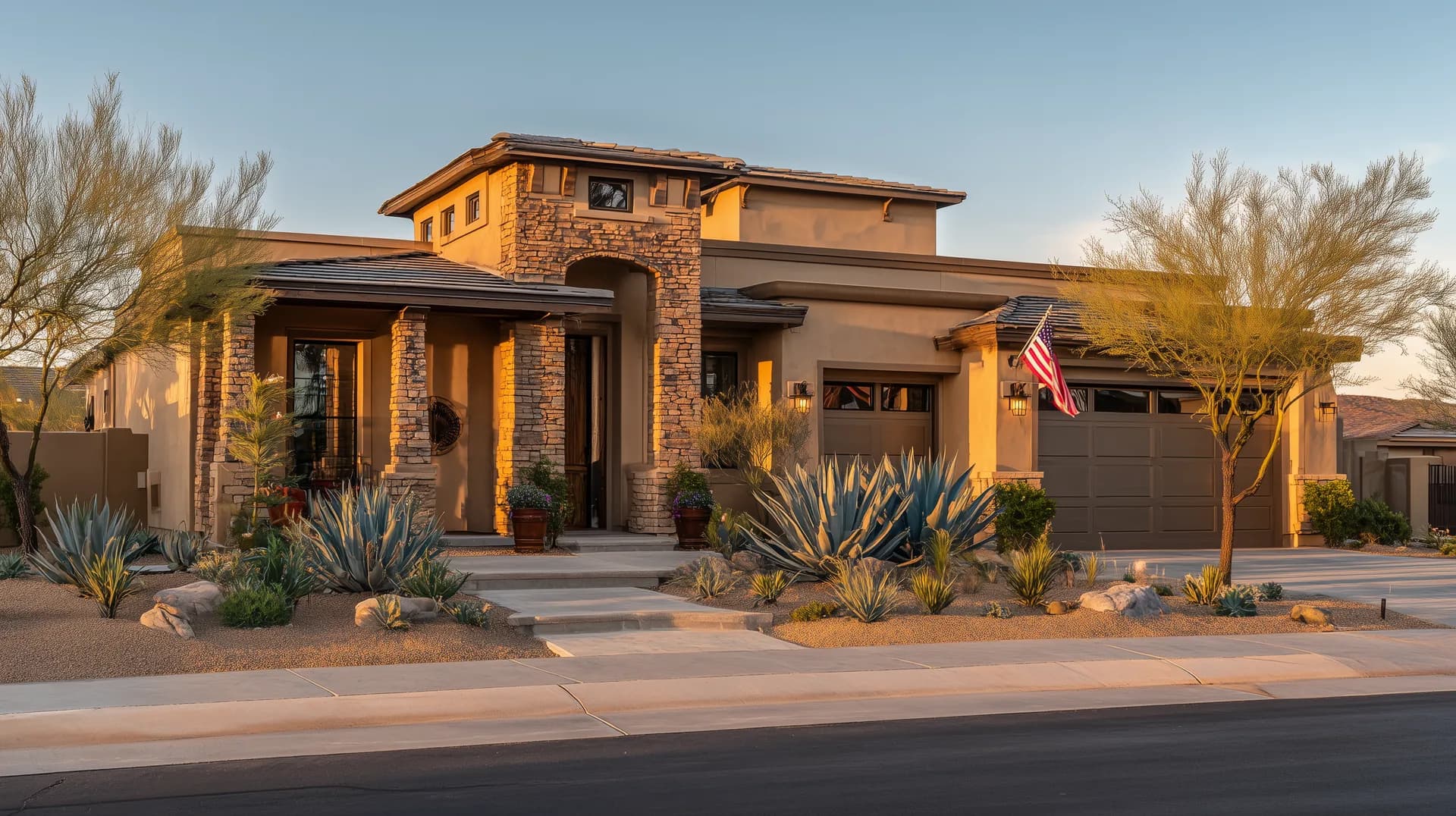
FHA loans let you buy a home with 3.5% down. On a $400,000 new construction home, that is $14,000 instead of the $80,000 you would need for a conventional 20% down payment. For a lot of buyers, that difference is the difference between buying now and waiting another three years to save.
But using an FHA loan on new construction is not as straightforward as using one on a resale home. There are extra hoops, and not every builder wants to jump through them. Here is what you need to know before you start shopping.
The basics: FHA is a government-backed loan program administered by the Federal Housing Administration. The lender still makes the loan — FHA just insures it, which is why lenders are willing to accept a lower down payment. Your credit score needs to be at least 580 for the 3.5% down option (500-579 requires 10% down). There are loan limits that vary by county — in Maricopa County, the 2026 FHA loan limit for a single-family home is high enough to cover most new construction price points, but check the current number on HUD's website before you assume.
Not all builders accept FHA financing. This is the first thing to ask, before you fall in love with a floor plan. Some builders — particularly those building in the higher price ranges — simply do not want to deal with FHA transactions. It is not personal. The FHA appraisal process is more involved, the timeline can be longer, and there are property condition requirements that occasionally create friction. Builders who focus on entry-level and first-time buyer communities tend to be very comfortable with FHA. Builders who focus on $600,000-plus homes sometimes are not. Ask the sales rep on your first visit: "Do you accept FHA financing in this community?"

The FHA appraisal is different from a conventional appraisal. A conventional appraiser is primarily evaluating market value. An FHA appraiser evaluates market value AND checks that the home meets FHA Minimum Property Requirements — basically, safety and habitability standards. They are looking at things like: is the water heater properly strapped, are the handrails secure, is there proper drainage away from the foundation, are there any health or safety hazards. New construction homes almost always pass because they are built to current code, but the appraiser can flag issues that a conventional appraiser would ignore. If something gets flagged, the builder has to fix it before closing, which can add a week or two to the timeline.
One-time close versus two-time close — this matters if you are building from scratch rather than buying a move-in ready home. A one-time close construction loan (also called a construction-to-permanent loan) rolls the construction financing and the permanent mortgage into a single loan with one closing. You qualify once, you close once, and the loan converts to a permanent FHA mortgage when the home is complete. A two-time close means you get a construction loan first, then refinance into an FHA mortgage when the home is done — two sets of closing costs, two qualification processes.
One-time close FHA loans exist but not every lender offers them. If you want this route, you need to find a lender who specifically does FHA one-time close construction loans. Ask early. Do not assume your lender offers this just because they do regular FHA loans.
Here is the big one that catches people: MIP. Mortgage Insurance Premium. FHA loans require both an upfront MIP (1.75% of the loan amount, usually rolled into the loan) and an annual MIP (currently 0.55% per year for most borrowers, paid monthly). On a $400,000 loan, that is about $183 per month added to your payment. And unlike conventional PMI, which drops off when you reach 20% equity, FHA MIP stays for the life of the loan if you put down less than 10%. The only way to get rid of it is to refinance into a conventional loan once you have enough equity. This is a real cost that a lot of first-time buyers do not account for when they are comparing monthly payments.

The lot itself can be a factor. If the community is on land that was recently subdivided, the lot needs to meet FHA requirements. In most established new construction communities from major builders, this is not an issue — they have built hundreds of FHA-financed homes and the community is already set up for it. But in smaller or newer developments, it is worth confirming.
Timing is something to think about. FHA appraisals can take longer to schedule than conventional appraisals because there are fewer FHA-approved appraisers. In a busy market, that can add a week to your timeline. If the builder has a hard closing date and your appraisal is delayed, that creates stress for everyone. Build a buffer into your timeline and communicate with your lender early and often.
Builder incentives and FHA can interact in ways that trip people up. Builders often offer closing cost credits or rate buydowns when you use their preferred lender. FHA has limits on how much a seller (which includes the builder) can contribute toward closing costs — currently 6% of the sale price. Most builder incentive packages fall well within that limit, but if a builder is offering an unusually aggressive incentive package, make sure your lender confirms it complies with FHA seller contribution limits before you count on it.
The bottom line: FHA is a legitimate, powerful tool for buying new construction with minimal cash out of pocket. The tradeoff is the ongoing MIP cost and the slightly more complex process. If your credit score is 620 or above and you can swing 5% down, compare the FHA option against conventional loans with PMI — sometimes the conventional loan with 5% down ends up cheaper on a monthly basis once you factor in the MIP difference. A good loan officer will run both scenarios for you side by side. Ask for that comparison before you commit to either path.