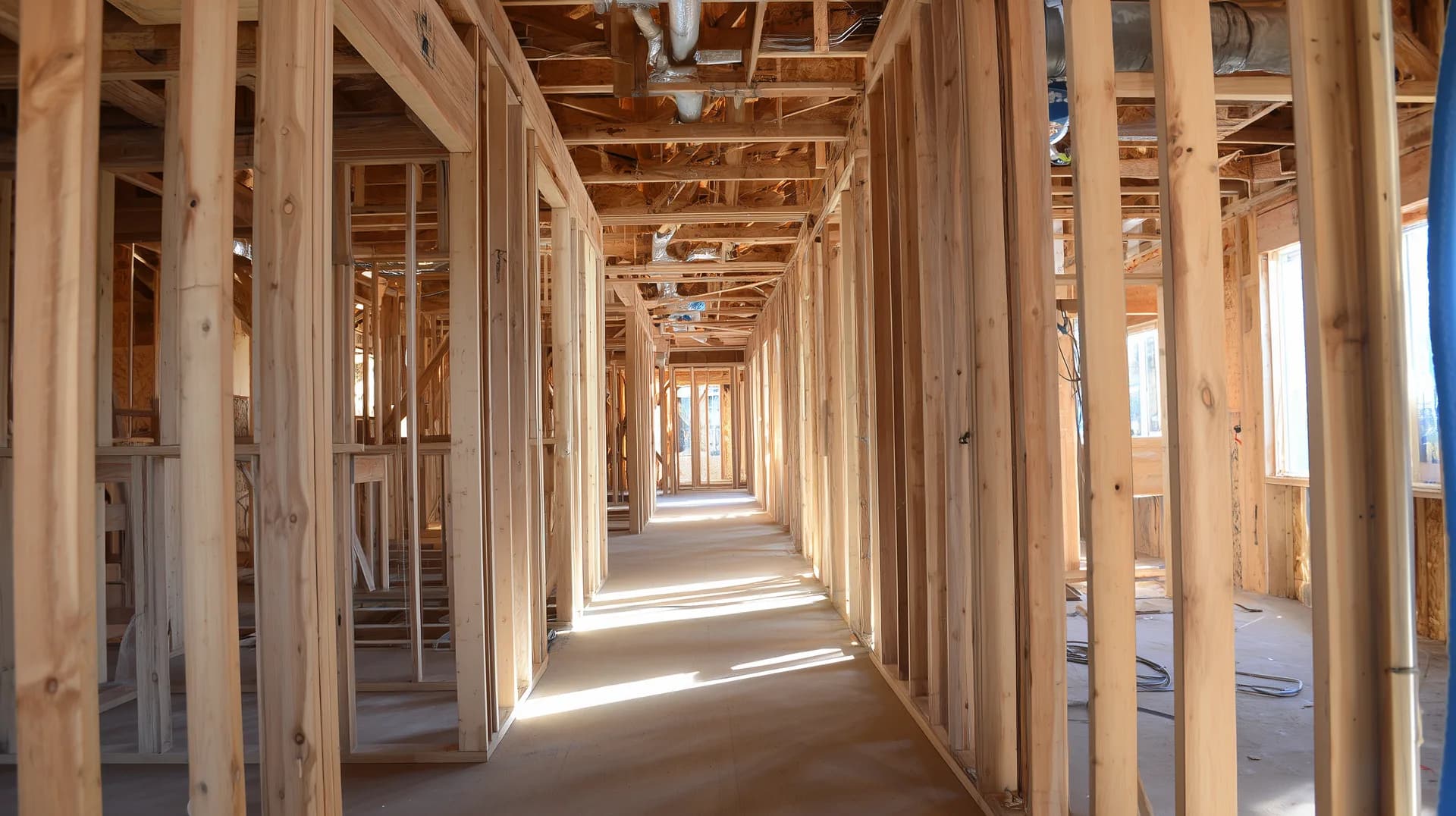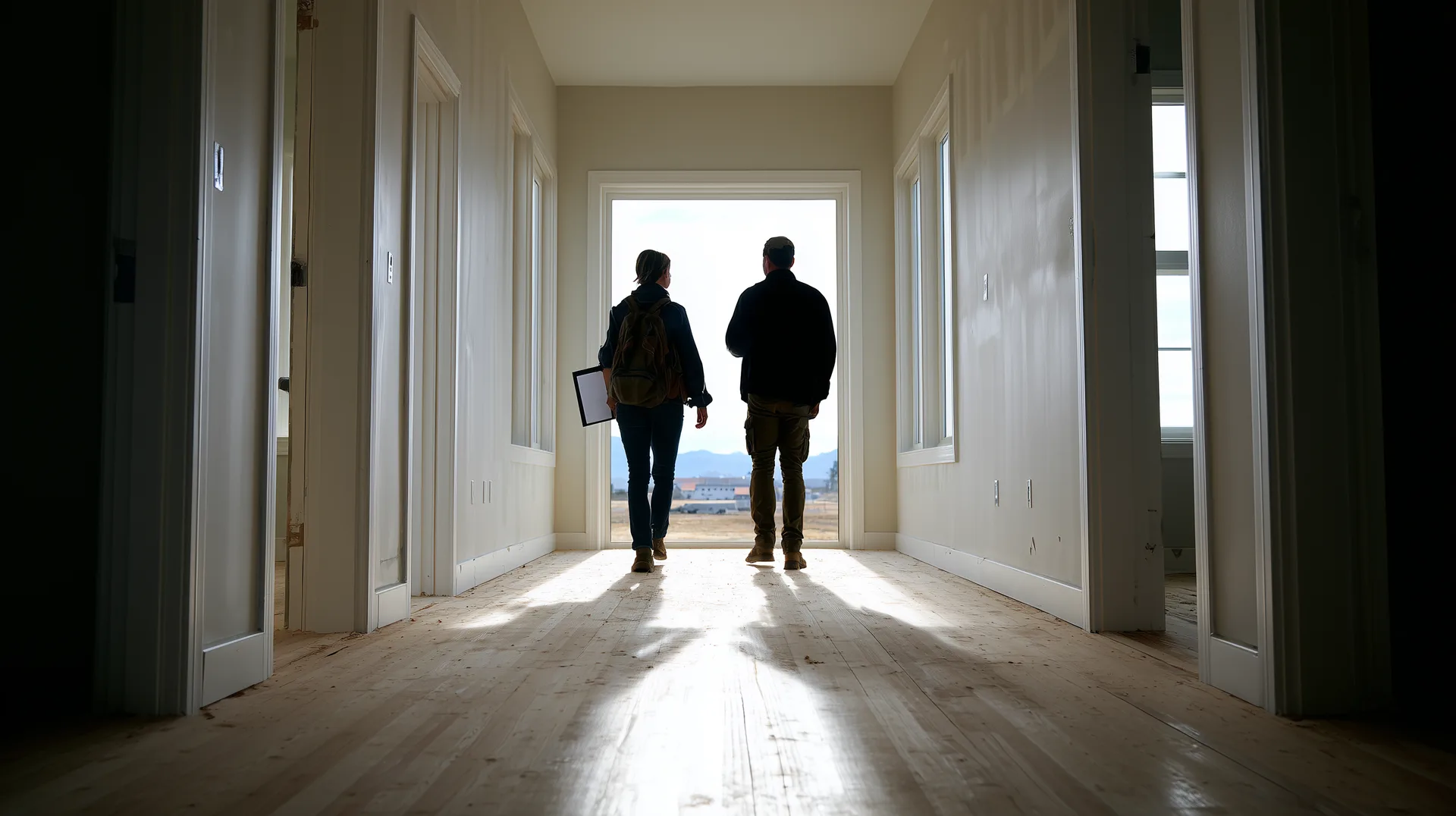
Your builder will schedule a final walkthrough — sometimes called a punch walk or orientation walk — about 1-2 weeks before your closing date. This is your chance to walk through your actual, finished home and identify anything that needs to be fixed before you take ownership. It is one of the most important appointments in the entire homebuying process, and most buyers do not prepare for it nearly enough.
Bring the right tools. You do not need a toolbox, but you do need a few things. Blue painter's tape — this is what you will use to mark defects. Stick a piece of tape next to every scratch, dent, misalignment, or issue you find. By the end, your house will look like it has a rash. That is fine. A flashlight — your phone flashlight works, but a real flashlight is better for checking inside cabinets, under sinks, and in the attic access. A phone charger — not for your phone's battery, but to test every single electrical outlet in the house. Plug the charger in, see if it charges. Outlet works. Move to the next one. And bring your phone for photos — you want a photo of every issue you flag.
Start outside. Walk the perimeter of the house. Look at the stucco or exterior finish for cracks, chips, or uneven texture. Check the paint for drips, missed spots, and color consistency. Look at the roofline — are the tiles or shingles evenly laid? Check the garage door — open and close it. Does it operate smoothly? Does it seal at the bottom? Look at the driveway and walkways for cracks. Check the exterior light fixtures — do they all work? Look at the front door and back door weather stripping — does it seal tight with no visible gaps?
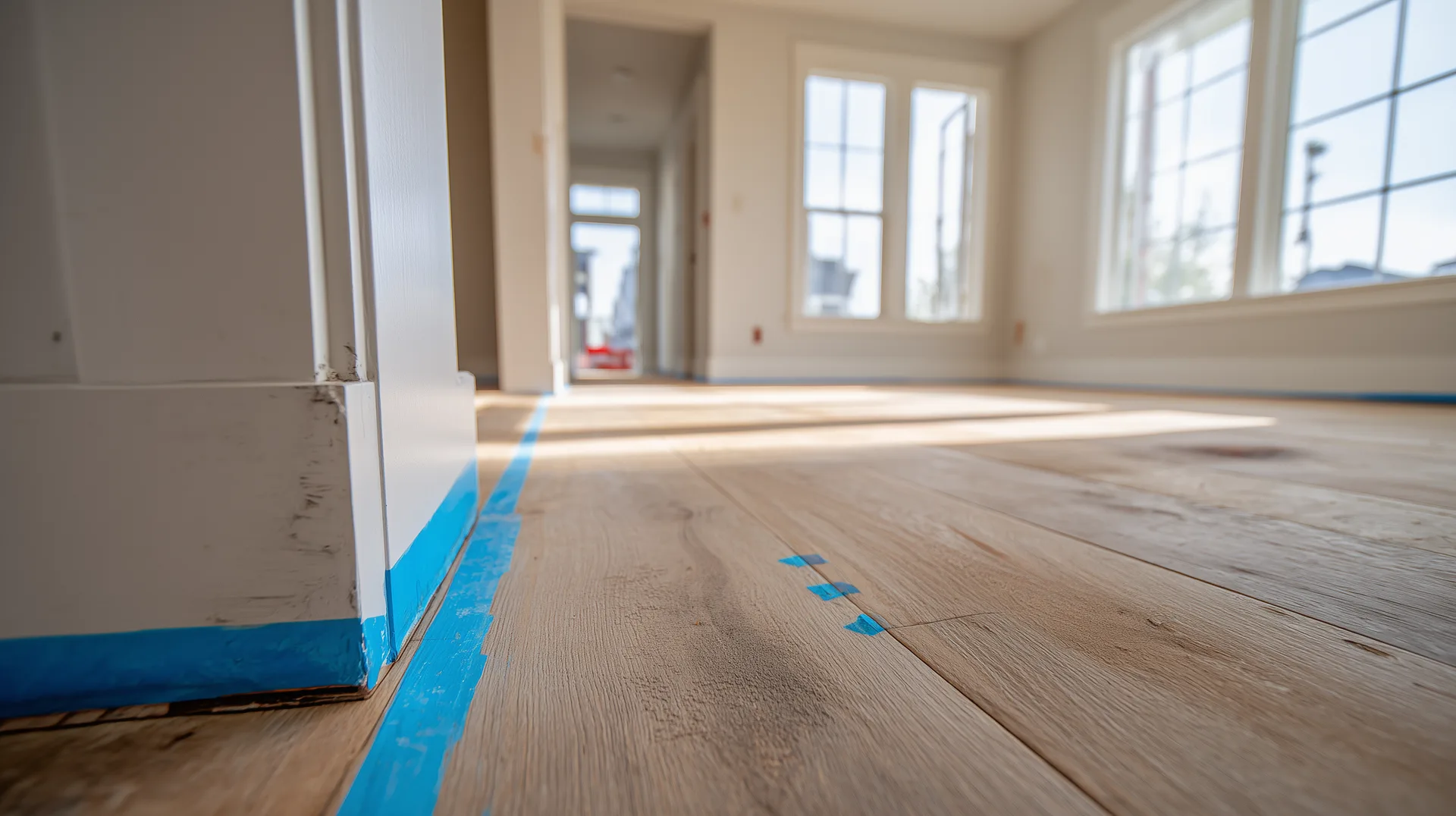
Inside, check the floors first. Walk every room slowly. Feel for soft spots, squeaks, or unevenness. Look at the tile grout lines — are they consistent in width and color? Check the transitions between different flooring materials — are they clean and level? If you have hardwood or luxury vinyl plank, look for scratches, gaps between planks, and boards that are not flush. Get down on your knees if you need to. You are about to own these floors for a long time.
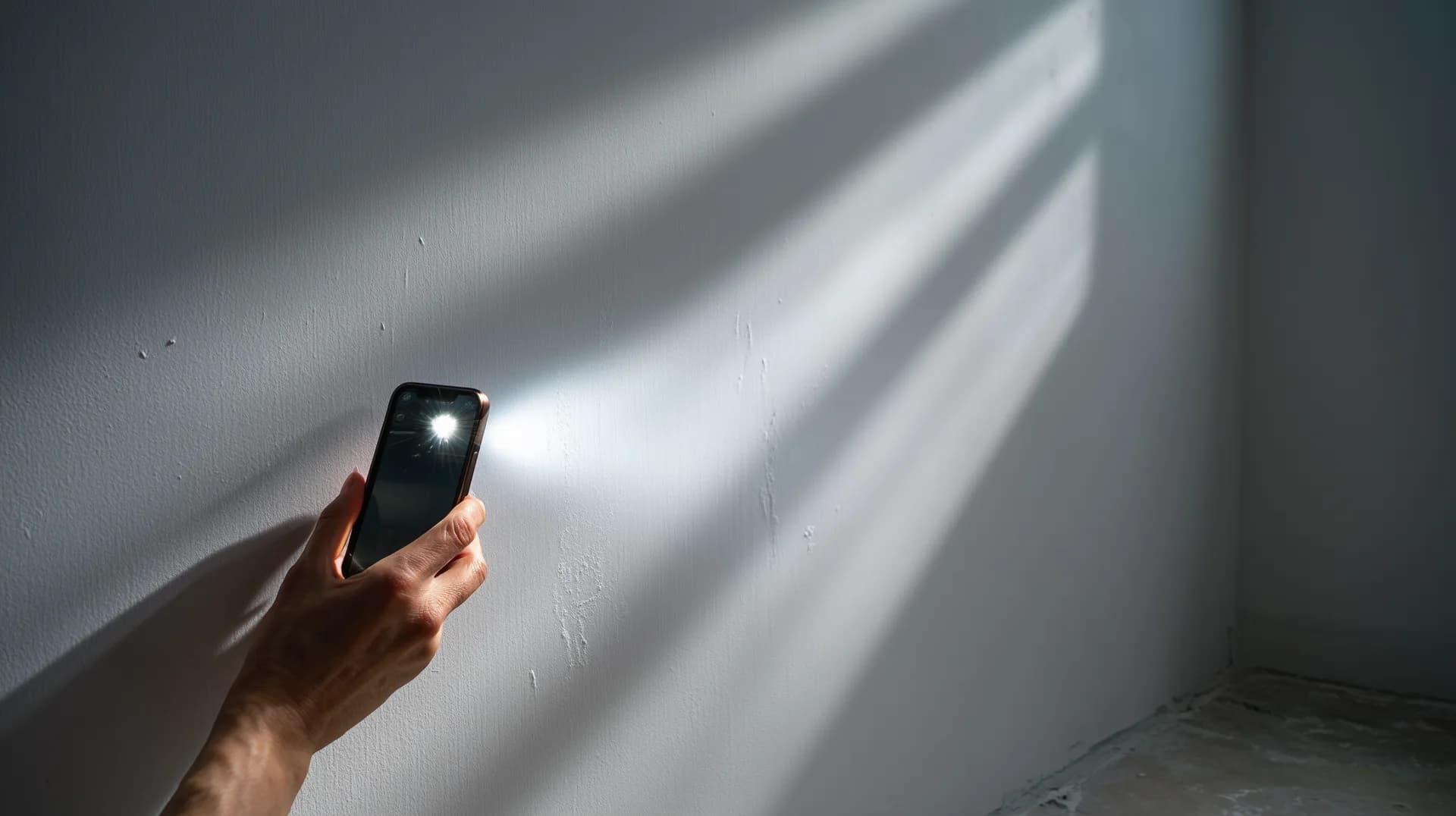
The paint is where you use the raking light technique. Stand at one end of a wall and shine your flashlight along the surface at a low angle — almost parallel to the wall. This side-lighting reveals every imperfection: roller marks, drips, missed spots, uneven texture, and drywall seams that were not properly finished. In normal overhead lighting, the walls look perfect. In raking light, you see everything. Mark what you find, but keep perspective — the builder will fix obvious paint defects, but they are not going to repaint an entire room because of a faint roller mark you can only see at a specific angle.
Check every window and door. Open them. Close them. Lock them. Unlock them. Do they operate smoothly? Do the locks engage properly? Do the windows seal when closed — can you feel any air around the edges? Look at the window glass for scratches, especially near the edges where construction debris may have scraped the surface. Check the window screens — are they intact, properly fitted, and free of tears?
Run every faucet — kitchen, bathrooms, laundry, outdoor hose bibs. Check for leaks under every sink (open the cabinet and look). Flush every toilet and wait to make sure it stops running. Turn on the shower in every bathroom and check the water pressure. Look at the caulking around tubs and showers — it should be clean, consistent, and fully sealed.
Open every cabinet door and every drawer in the kitchen and bathrooms. Do the doors align with each other? Do the drawers slide smoothly and close fully? Are there any scratches or dents on the cabinet faces? Check the hinges — do the doors stay open at whatever angle you set them? Look at the interior of the cabinets — are they clean and free of sawdust or debris?
Check the countertops carefully. Run your hand along the surface to feel for rough spots or chips. Look at the countertops from an angle with the light behind you — this reveals scratches that are invisible from above. Check where the countertop meets the backsplash — is the caulk line clean and consistent? Check around the sink cutout — is it properly sealed?
Test the HVAC system. Turn the AC on and verify that cold air comes from every register in every room. Do the same with heat. Listen for unusual noises — rattling, buzzing, or whistling from the ducts. Check that the thermostat works and responds to changes. Look at the air filter — it should be clean and properly installed.
Look at the garage floor for cracks. Some hairline cracking is normal and expected in concrete. Cracks wider than a quarter inch or cracks that are offset (one side higher than the other) should be flagged. Check the garage walls and ceiling for drywall finish quality. Test the garage door opener — does it reverse when it hits an obstruction?
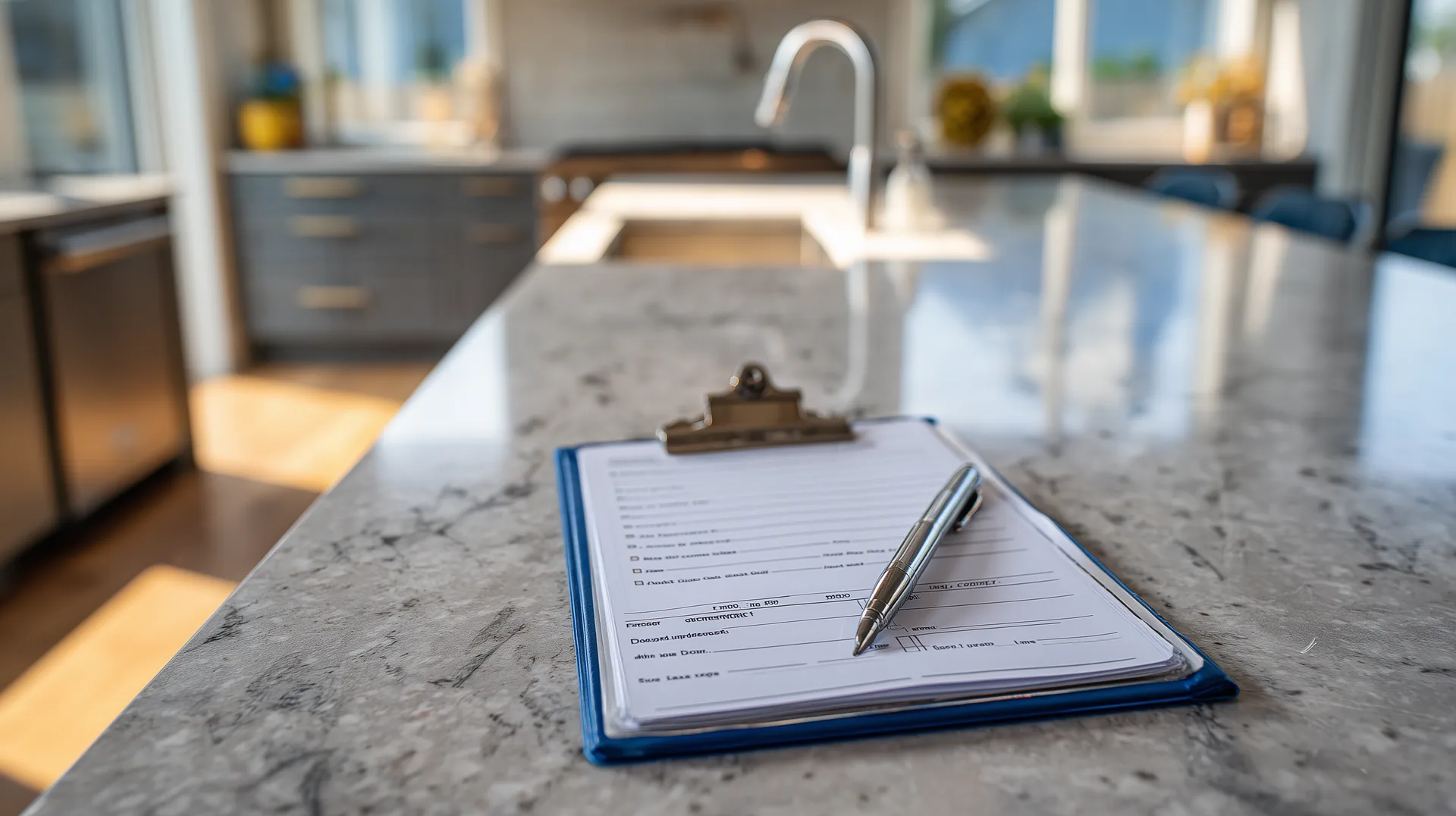
The builder's representative will walk with you and take notes on everything you flag. They will have a punch list form or a tablet where they document each item. At the end, you both sign the list. The builder then has a set amount of time — usually until closing or shortly after — to complete the repairs. Some items may be completed before closing. Some items, especially if they require specialty trades or materials, may be addressed after closing with a written agreement.
Know what is realistic to flag and what is not. The builder will fix: scratched countertops, chipped tile, misaligned cabinet doors, paint touch-ups on obvious defects, missing hardware, non-functioning outlets or switches, plumbing leaks, HVAC issues, damaged window screens, and drywall damage. The builder will not fix: minor drywall imperfections that are only visible in raking light, slight color variations between tile pieces from the same lot, hairline settling cracks that are cosmetic and expected, minor grout color inconsistencies, or carpet seams that are visible but properly installed.
Walk slowly. Take your time. The builder's rep may try to keep things moving — they have a schedule — but this is your home and your inspection. A thorough walkthrough takes 60-90 minutes for a typical home. If you feel rushed, say so. And if you miss something, most builders will still address legitimate defects found within the first 30 days after closing. But it is much easier to get things fixed before you own the home than after.