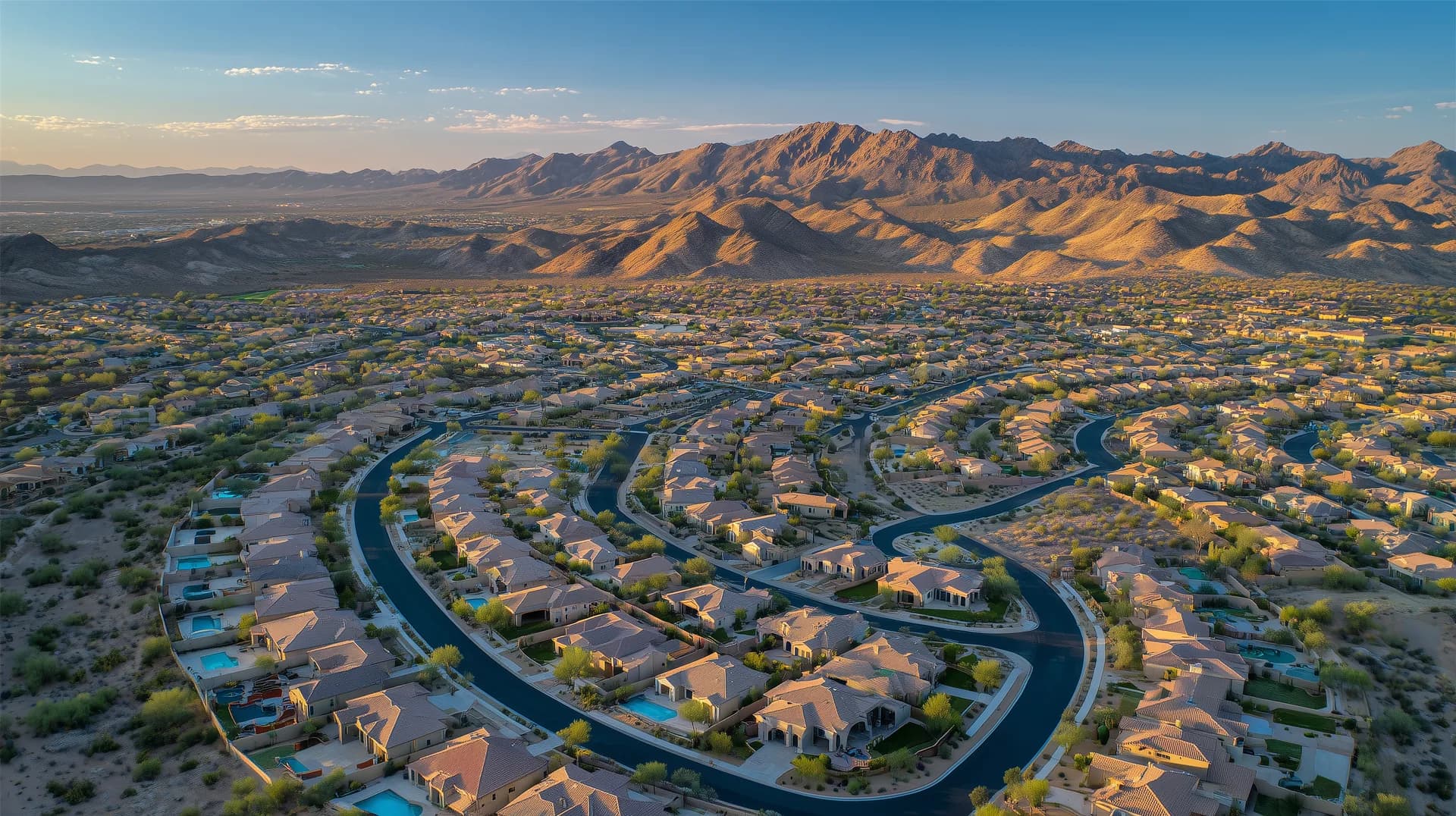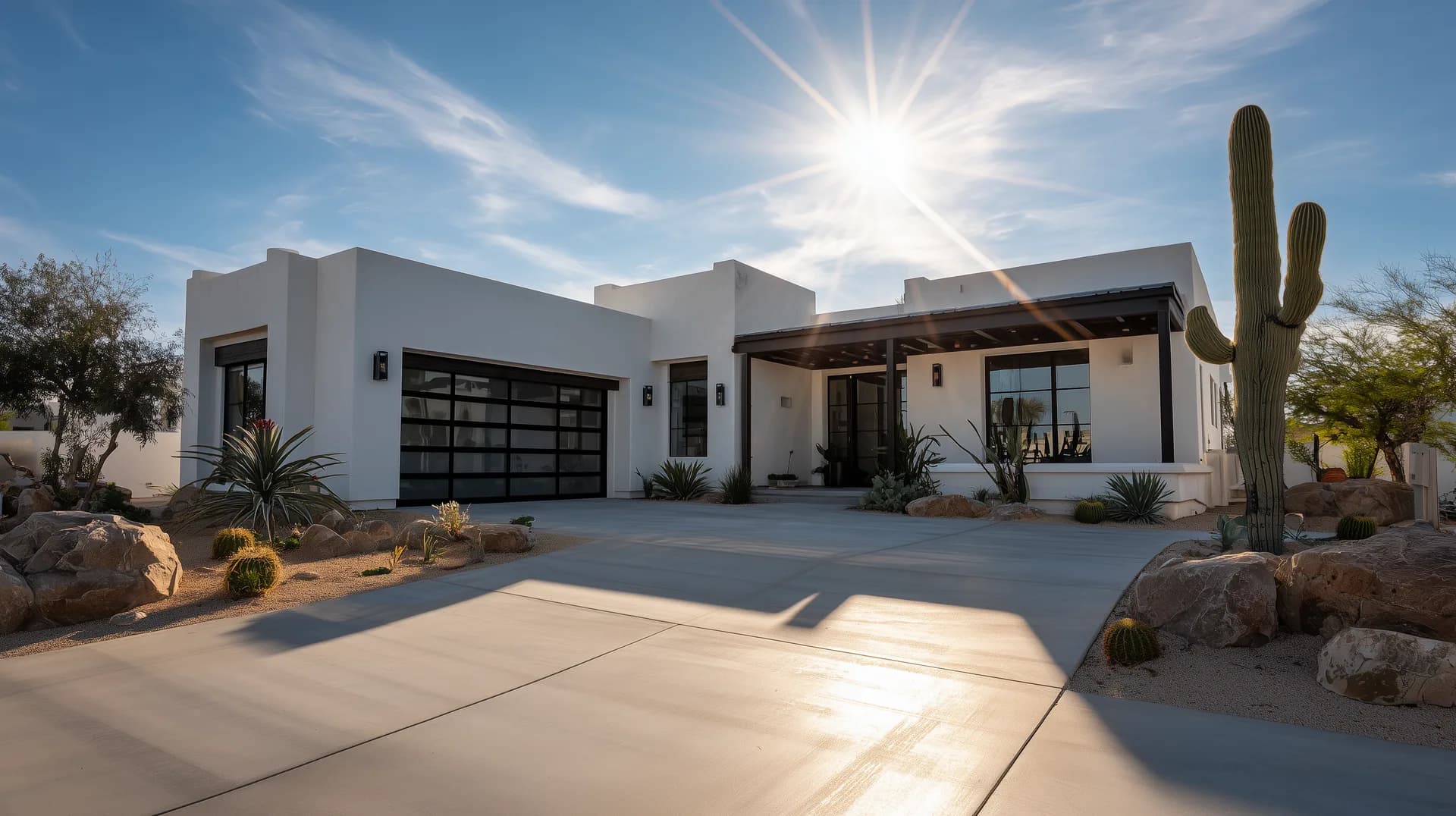
Phoenix is one of the best new construction markets in the country. It is also one of the hottest cities on Earth. Those two facts collide in your lot selection, your energy bill, and your daily comfort in ways that buyers from other climates do not think about until it is too late.
Orientation is everything. In Phoenix, a west-facing home — meaning the front of the house faces west — takes the full force of the afternoon sun on its front wall, front windows, and garage door from about 1pm to sunset. In July, the surface temperature of a west-facing stucco wall can exceed 150 degrees Fahrenheit. The air temperature in front of your house at 4pm will be 115-120 degrees. Your garage, which shares that west-facing wall, becomes an oven — 130-140 degrees is common. If you have anything in your garage that melts, warps, or dislikes extreme heat (paint, adhesives, wine, candles, chocolate, your car's interior), a west-facing garage is a problem.
North-facing is the premium orientation in Phoenix. The front of the house stays in shade for most of the day. The backyard faces south, which gets sun but is manageable with a covered patio. Your garage stays cooler. Your energy bill stays lower. If you can get a north-facing lot, take it seriously — it is the most valuable orientation in the desert and lot premiums often reflect that.
South-facing works well if the builder designed proper roof overhangs. The Arizona sun sits higher in the sky during summer, so south-facing walls actually get less direct sun than west-facing walls in June and July. A good 2-3 foot overhang blocks most of the high summer sun while letting in lower winter sun for warmth. Check the elevation drawings for overhang depth.
East-facing is the morning sun orientation. Your front takes heat from sunrise to about noon, and then the front is in shade for the rest of the day. This is generally comfortable, but your backyard faces west — which means your outdoor living space gets pummeled by afternoon sun. If you plan to spend evenings on your patio, an east-facing lot means you will need a robust shade structure or you will be sitting in direct western sun until 7pm in summer.
Now let us talk about windows. The amount of glass on a given wall matters enormously. A west-facing wall with a single small window is fine. A west-facing wall with a floor-to-ceiling great room window is a solar oven. Ask about the window specifications — specifically, look for Low-E (low emissivity) glass with a low Solar Heat Gain Coefficient (SHGC). In Phoenix, you want an SHGC of 0.25 or lower on west and east facing windows. This number tells you how much solar heat passes through the glass. Standard Low-E glass blocks a lot, but premium Low-E coatings block more. The difference between 0.25 and 0.40 SHGC on a large west-facing window can be $30-50 per month on your cooling bill in peak summer.
Insulation matters more in Phoenix than almost anywhere else in the country. Ask the sales rep about the insulation R-values in the walls and the attic. Standard new construction typically uses R-13 to R-15 in exterior walls and R-30 to R-38 in the attic. Higher is better. Some builders offer upgrade packages with R-19 walls and R-49 attic insulation, and in this climate, that upgrade pays for itself in energy savings within a few years.
Two-story homes have a specific challenge: heat rises, and your upstairs will always run warmer than your downstairs. Most new construction two-stories have separate HVAC zones for each floor, which helps. But even with dual zones, expect the upstairs to be 2-4 degrees warmer than the downstairs during peak summer. Your upstairs AC unit, sitting on a 160-degree roof, works harder and runs more. Upstairs energy costs are genuinely higher. If you are choosing between a single-story and a two-story, know that the single-story will be cheaper to cool by $40-80 per month in summer.
Desert landscaping is required in most new construction communities, which means rock, decomposed granite, desert-adapted plants, and drip irrigation — not grass. Some communities allow small grass patches in the backyard but not the front. This is actually a benefit: desert landscaping uses a fraction of the water that a traditional lawn requires, and your yard maintenance is minimal once established. But it means your outdoor space will look and feel different than what you might be used to.
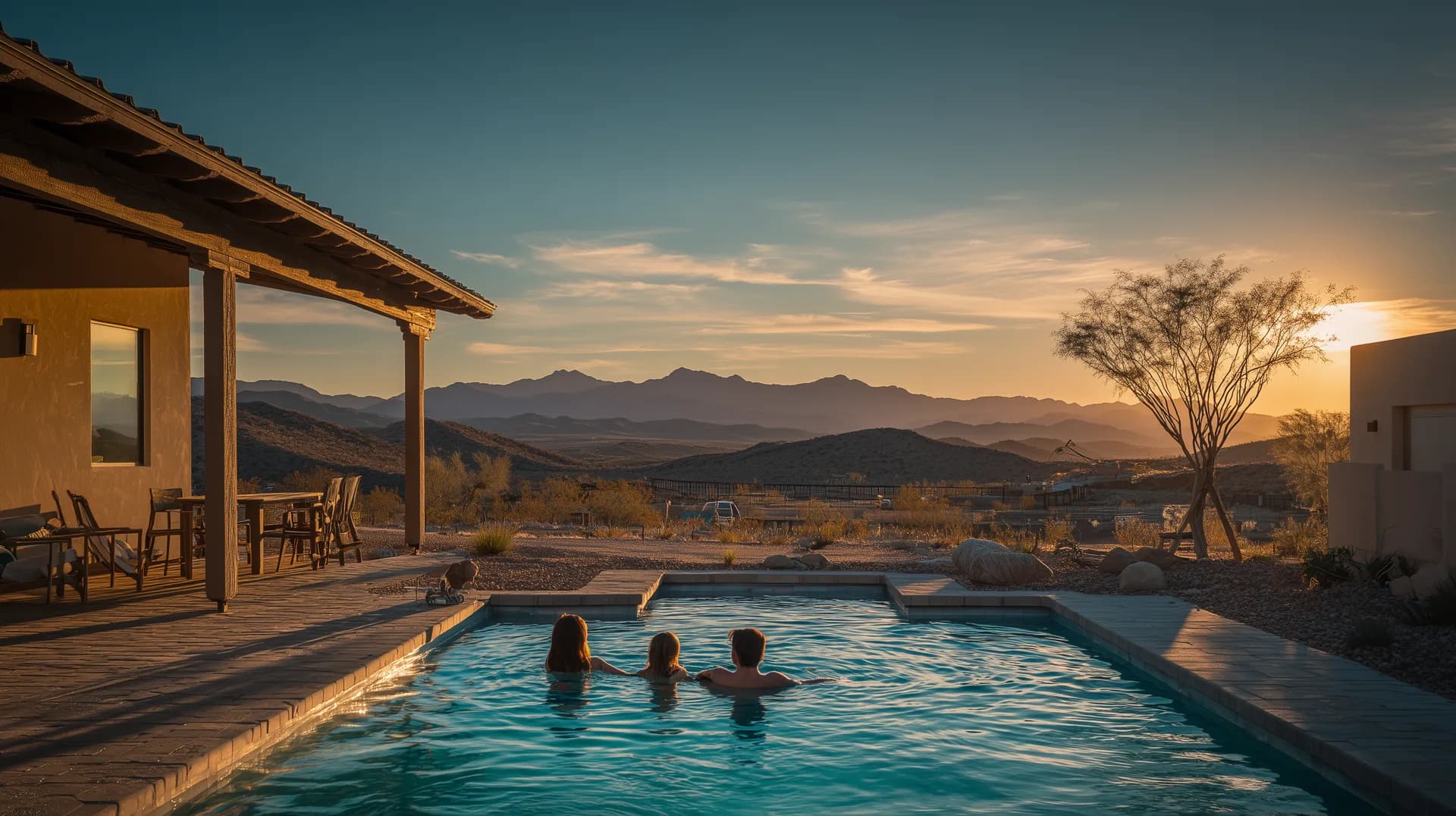
If you are planning a pool — and a lot of Phoenix homeowners do — think about the orientation. A pool on the west side of the house gets brutal afternoon sun, which sounds nice for swimming but means the water temperature in July can hit 95 degrees (more like a warm bath than a refreshing dip) and the pool deck surface temperature can exceed 170 degrees. You will not be able to walk to the pool barefoot. An east-facing or north-facing pool gets more shade in the afternoon, keeps the water a bit cooler, and the deck is more usable during the hours you actually want to be outside.
Here is my best advice if you can swing it: visit the lot you are considering at 3pm on a day in June. Stand where your backyard will be. Feel the sun. Look at where the shade falls. Look at what is to the west of the lot — is there a two-story home blocking the afternoon sun, or is it open to the horizon? That 15-minute visit in the worst conditions will tell you more about the lot than any plat map or sales brochure ever could.